Species Search
 CC
CC
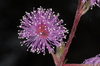
Sensitive Plants
(Genus Mimosa)
Info
Mimosa is a genus of about 400 species of herbs and shrubs, in the mimosoid clade of the legume family Fabaceae. The generic name is derived from the Greek word μιμος (mimos), an "actor" or "mime," and the feminine suffix –osa, "resembling", suggesting its 'sensitive leaves' which seem to 'mimic conscious life'.
(Wikipedia)
 C
C
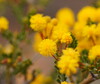
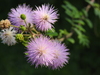
Tribe Mimoseae
Info
The Mimosoideae comprise a subfamily of the flowering plant family Fabaceae (Leguminosae) characterized by flowers with small petals and numerous prominent stamens.
(Wikipedia)
 CC
CC
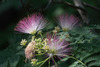
Mimosa, Silk Trees, False-thorns, and Allies
(Genus Albizia)
Info
Albizia is a genus of about 150 species of mostly fast-growing subtropical and tropical trees and shrubs in the subfamily Mimosoideae of the family Fabaceae. The genus is pantropical, occurring in Asia, Africa, Madagascar, America and Australia, but mostly in the Old World tropics. In some locations, some species are considered weeds.
(Wikipedia)
 CC
CC
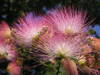
Persian Silk Tree
(Albizia julibrissin)
Info
Albizia julibrissin (Persian silk tree, pink silk tree) is a species of tree in the family Fabaceae, native to southwestern and eastern Asia.
(Wikipedia)
 CC
CC
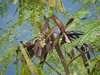
White Leadtree
(Leucaena leucocephala)
Info
Leucaena leucocephala is a small fast-growing mimosoid tree native to southern Mexico and northern Central America (Belize and Guatemala) and is now naturalized throughout the tropics.
(Wikipedia)
 CC
CC
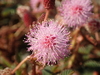
Sensitive Plant
(Mimosa pudica)
Info
Mimosa pudica (from Latin: pudica "shy, bashful or shrinking"; also called sensitive plant, sleepy plant, Dormilones, touch-me-not, or shy plant) is a creeping annual or perennial herb of the pea family Fabaceae often grown for its curiosity value: the compound leaves fold inward and droop when touched or shaken, defending themselves from harm, and re-open a few minutes later. The species is native to South America and Central America, but i
(Wikipedia)
 CC
CC
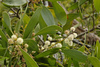
Blackwood
(Acacia melanoxylon)
Info
Acacia melanoxylon, commonly known as the Australian blackwood, is an Acacia species native in eastern Australia. The species is also known as Sally wattle, lightwood, hickory, mudgerabah, Tasmanian blackwood, black wattle or blackwood acacia.
(Wikipedia)
 C
C
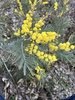
Silver Wattle
(Acacia dealbata)
Info
Acacia dealbata (known as silver wattle, blue wattle or mimosa) is a species of Acacia, native to southeastern Australia in New South Wales, Victoria, Tasmania, and the Australian Capital Territory and widely introduced in Mediterranean, warm temperate, and highland tropical landscapes.
(Wikipedia)
 CC
CC
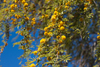
Sweet Acacia
(Vachellia farnesiana)
Info
Vachellia farnesiana, also known as Acacia farnesiana, and previously Mimosa farnesiana, commonly known as sweet acacia, huisache or needle bush, is so named because of the numerous thorns distributed along its branches. The native range of V. farnesiana is uncertain. While the point of origin is Mexico and Central America, the species has a pantropical distribution incorporating northern Australia and southern Asia. It remains
(Wikipedia)
 CC
CC
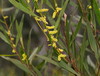
Longleaf Wattle
(Acacia longifolia)
Info
Acacia longifolia is a species of Acacia native to southeastern Australia, from the extreme southeast of Queensland, eastern New South Wales, eastern and southern Victoria, and southeastern South Australia. Common names for it include long-leaved wattle, acacia trinervis, aroma doble, golden wattle, coast wattle, sallow wattle and Sydney golden wattle. It is not listed as being a threatened species, and is considered invasive i
(Wikipedia)
 CC
CC
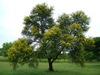
Sweet Thorn
(Vachellia karroo)
Info
Vachellia karroo, commonly known as the Sweet thorn, is a species of acacia, native to southern Africa from southern Angola east to Mozambique, and south to South Africa.
(Wikipedia)
 CC
CC
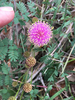
Complex Mimosa quadrivalvis
Info
Mimosa quadrivalvis, known as fourvalve mimosa, sensitive briar and cat's claw, is a trailing vine native to North America, Central America, and the Caribbean. It is known as sensitive briar because the leaves fold when they are touched or disturbed.
(Wikipedia)
 CC
CC
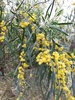
Golden Wreath Wattle
(Acacia saligna)
Info
Acacia saligna, commonly known by various names including coojong, golden wreath wattle, orange wattle, blue-leafed wattle, Western Australian golden wattle, and, in Africa, Port Jackson willow, is a small tree in the family Fabaceae. Native to Australia, it is widely distributed throughout the south west corner of Western Australia, extending north as far as the Murchison River, and east to Israelite Bay. The Noongar peoples know the tree a
(Wikipedia)
 CC
CC
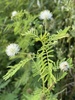
Illinois Bundleflower
(Desmanthus illinoensis)
Info
Desmanthus illinoensis (commonly known as Illinois bundleflower, prairie-mimosa or prickleweed) is a common plant in many areas of the south central and Midwestern US. It can often be found growing on the sides of roads, needing full sun and ample moisture during its short growing season.
(Wikipedia)
 CC
CC
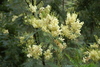
Black Wattle
(Acacia mearnsii)
Info
Acacia mearnsii is a fast-growing, extremely invasive leguminous tree native to Australia. Common names for it include black wattle, Acácia-negra (Portuguese), Australian acacia, Australische Akazie (German), Swartwattel (Afrikaans), Uwatela (Zulu). This plant is now known as one of the worst invasive species in the world.
(Wikipedia)
 CC
CC
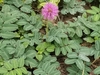
Sunshine Mimosa
(Mimosa strigillosa)
Info
Mimosa strigillosa, also known as sunshine mimosa and powderpuff, is a perennial ground cover in the Mimosaceae family that is native to nearly all US states bordering the Gulf of Mexico and grows north into Georgia and Arkansas as well. The name powderpuff refers to the small spherical flowers that rise above the plant's creeping vines. Like related species in the Mimosa genus sunshine mimosa has sensitive leaves that can fold in a matter of seconds...
(Wikipedia)
 CC
CC
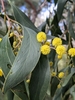
Golden Wattle
(Acacia pycnantha)
Info
Acacia pycnantha, commonly known as the golden wattle, is a tree of the family Fabaceae native to southeastern Australia. It grows to a height of 8 m (26 ft) and has phyllodes (flattened leaf stalks) instead of true leaves. Sickle-shaped, these are between 9 and 15 cm (3 1⁄2 and 6 in) long, and 1–3.5 cm (1⁄2–1 1⁄2 in) wide. The profuse fragrant, golden flowers appear in late winter and spring, followed by long seed pods. Plants are cross-pollinated by several species of honey
(Wikipedia)
 CC
CC
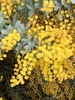
Cootamundra Wattle
(Acacia baileyana)
Info
Acacia baileyana or Cootamundra wattle is a shrub or tree in the genus Acacia. The scientific name of the species honours the botanist Frederick Manson Bailey. It is indigenous to a small area of southern New South Wales in Australia, but it has been widely planted in other Australian states and territories. In many areas of Victoria, it has become naturalised and is regarded as a weed, outcompeting indigenous Victorian species.
(Wikipedia)
 C
C
 CC
CC
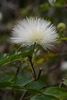
Giant Sensitive Plant
(Mimosa pigra)
Info
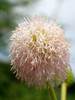
Mimosa pigra, commonly known as the giant sensitive tree, (pigra = lazy, slow), is a species of the genus Mimosa, in the family Fabaceae. It is native to the Neotropics, but has been listed as one of the world's 100 worst invasive species and forms dense, thorny, impenetrable thickets, particularly in wet areas.
(Wikipedia)
 CC
CC
Littleleaf Sensitive-Briar
(Mimosa microphylla)
Info
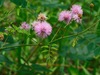
Mimosa microphylla, commonly called littleleaf sensitive-briar, is a species of flowering plant in the legume family (Fabaceae). It is native to North America, where it is found primarily in the southeastern United States. Its typical natural habitat is in dry woodlands and forests, although it can also be found in disturbed areas.
(Wikipedia)
 C
C
Catclaw Briar
(Mimosa nuttallii)
Info
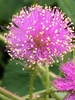
Mimosa nuttallii, the Nuttall's sensitive-briar, catclaw brier or sensitive brier, is a herbaceous perennial legume in the subfamily Mimosoideae native to the central United States. It has a trailing semiwoody vine covered with small recurved prickles that can be painful to bare skin.
(Wikipedia)
 CC
CC
Aroma
(Dichrostachys cinerea)
Info
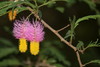
Dichrostachys cinerea, known as sicklebush, Bell mimosa, Chinese lantern tree or Kalahari Christmas tree (South Africa), is a legume of the genus Dichrostachys in the Fabaceae family.
(Wikipedia)